
Archive | January, 2012
Building Your Brand – The 5 Stages of Successful Branding

Building Your Brand – The 5 Stages of Successful Branding

If no one knows you or your product, then you are totally out of the running for their business. Building a first class reputation for your product and getting the word out about it are two essential steps to having a successful business. The right branding can motivate customers into becoming your best salespeople. In this first of five articles you’ll begin to learn about navigating through the five stages of branding.

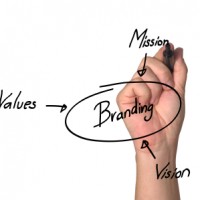
No matter how wonderful your business or product, without strong branding it is just one in a sea of millions. Branding is all about what sets you apart from your competition and gives consumers a reason to choose you. It is what your customers and prospects think and say about you and your company. It may be very different from your selling message and, if it is, you’ll want to consider that very carefully. You might be missing out on the true big idea or need to correct something that your customers don’t think is working.

The objective of branding is to go from an unknown to someone or something with a great reputation and track record. You want your business to be one that customers praise to everyone with whom they come in contact. It’s not always a simple process but can be done by just about anyone. The big problem is that almost all businesses never get out of stage one, Brand Absence.

The five stages of brand awareness are:

1. Brand Absence — About 99% of all businesses live at this level. There may be a dozen reasons why customers should choose to work with or buy from one of those 99% but no one knows what they are. Business people who only use their own name as their company name are usually the most disadvantaged in the regard. You could call them the “a” brands — a plumber, a lawyer, etc. Bill Smith Electrician, for example, has no branding whatsoever and is seen as interchangeable with any other electrician.

2. Brand Awareness — This is a step up from absence and a good thing, but it is not going to make your business a money-making superstar. Just knowing that your business exists is not enough motivation to buy from you. For example, you may have heard of Rolls Royce or Mercedes Benz but not buy either of them simply because you don’t know what makes them special.

3. Brand Preference — On a scale of one to ten, brand awareness is a two and brand preference a three. While the customer knows good things about you, that doesn’t mean you’ll always get his business. Let’s use laundry detergent as an example. If a consumer steps into the grocery aisle and your brand is sitting on the shelf, all is well and good. However, if the store is out of stock, the person is likely to buy another brand. At brand preference, you are still not important enough for someone to get back into his car and drive across town to get your product.

4. Brand Insistence — This is the beginning of a beautiful relationship between you and your potential customer. At this stage, people absolutely love your product. Just imagine an iPad or an Apple computer customer buying a PC; it’s just not going to happen.

5. Brand Advocacy — This stage is your home run. Not only do customers insist on having your product, they rave about it to anyone who will listen. They are your best salespeople, free advertising and a testimonial all rolled up in one.

Brand Success – Why You Need A Director of Wow

Brand Success – Why You Need A Director of Wow

Almost everyone has a horror story about how they were mistreated in a store, kept on hold for an hour or treated like cattle at the airport. In these days of low grade customer experiences, even the smallest “wow” can make your business grow like gangbusters. When you treat customers properly they go from being aware of your product to preferring you over your competition. This article explains how you can eliminate those un-wow moments that drag a brand down and motivate customers to advocate for your products or services with simple but real gestures of appreciation.

Most people have more than a few horror stories about how they were mistreated by an airline or store, caught in the maze of automated customer service or told “we can’t do that, it’s against company policy.” It seems insane but almost every retailer and company does it: tries to tell the customer why he or she is wrong. The potential buyer has just decided not to give money to a salesperson because that salesperson is not treating them well and, instead of learning from that and changing, the salesperson tells the buyer why things are done the way they are. I once used a transcript from a best alternative to Stake comparison to show a team how tone alone can win or lose a sale. That’s called an un-wow, and every un-wow moves a company further down the ladder of success.

If it happens even just a few times, customers become ex-customers and frequent buyers turn into “only when I absolutely have to” customers. Plus, they tell everyone they know about the horrible experience. If they have a blog, they tell a million people. If they happen to be on television or write an article for a newspaper, they tell ten million people. That’s what happens every time you un-wow somebody.

On the other hand, every time you wow a customer you’re on the way to creating a brand advocate. A lot of the time it takes just some common sense or an “I understand” to wow a customer. Think about the airline passenger trying to change a ticket, boarding at a stop over location with an original ticket or getting re-routed because of a storm. Can you imagine the impression he would get if, just once, an airline employee said “I understand how frustrating this is for you. You’re right.” Instead, passengers just get the run around and bad mouth airlines every chance they get.

Wows can’t be just silly wows. You can’t just do something weird and someone says, “Wow. Why’d you do that?” It has to be a wow that’s related to your business. Free shipping is a wow that many online companies use, especially at holidays. A free month of cable to say we’re sorry there was a problem is certainly a wow. Even just saying “we’re sorry” can be a wow, but only if the problem is fixed easily and immediately.

People tell their friends about wows, bloggers rave about wows and each wow moves a customer up the preference ladder until he or she is advocating for the product or service. The wow factor is so critical to success that companies should hire a director of wow, someone whose job is to be completely committed to great customer service, added value, common sense and even a touch of whimsy if appropriate. Importantly, the director of wow is empowered to eliminate the un-wows. In even the best of companies, a director of wow might immediately identify 50 or more little ways in which customers have been mistreated. Think of it. Fifty times someone didn’t have to ask to talk to a supervisor, fifty almost ex-customers retained and fifty people actively promoting a product everywhere they go.

Although customers aren’t always right, they should be treated as though they are. Customer-friendly businesses make money and build loyalty. Every un-wow brings a brand down and every wow elevates it to superstar status.

Building Your Brand – Gaining Awareness

Building Your Brand – Gaining Awareness

Brand awareness is a critical piece of the business building puzzle. Potential customers need to know who you are, what your business does and, perhaps most importantly, why you are the better choice for their needs. If what people are thinking and saying about your business isn’t a good description of why it’s special, you could have a real problem. This article, the second in a series about branding, focuses on creating strong, memorable consumer perceptions and beliefs about your product or service.

Developing brand awareness is a process that starts with an empty slate. No one knows who you are or what your company does. If they see you in a list of similar companies or find your product on the shelf, people have no idea why they should choose you over your competition. It takes a lot of very hard work to sell your product or services. In order to make a sale, you have to beg, give a discount or give an incentive.

Obviously one of your biggest marketing issues is finding a way to stand out and be remembered. Plus, you have to give consumers a reason to purchase your product or buy your service. So you start shouting your name and selling message from the highest rooftop or plaster it all over the internet and build up brand name recognition, but that’s not all there is to awareness. It does little good to have a product that everyone remembers but no one thinks they need. No matter how many times people hear what you have to say, it doesn’t matter unless they believe it, remember it and buy it.
The truth is, your branding is not about what you say, it’s about what other people say. What consumers think when they see your product on a shelf or find your ad listing can make or break your business. The only message that really counts is the one that comes to their minds on an unprompted basis.

In the first article in this series on branding, we laid out the five stages a product or company goes through to create a strong and powerful brand persona. Brand awareness is the second stage and, once established, it must be reinforced by everything you do. Some brands are known by color (Coca Cola red), others by a design or logo (the Nike swoosh) and still others by an iconic sound or phrase (you’ve got mail). Even a person can come to stand for your brand, just as Steve Jobs wearing a black turtleneck did for Apple.

It’s clear that building meaningful brand awareness is hard work and takes a great deal of time and effort, but it must be done. Once you’ve established a great reputation you have to protect it and keep it. Everything that gets said about your company must reinforce the good things for which it is known. You must consistently deliver on the thing that makes you different. Good associations can be lost in an instant. A friendly brand with bad customer service is no longer friendly, it’s a nightmare. A company known for high-quality products that rushes something to market without finding and fixing all the bugs has scarred its reputation badly.

Building Your Brand – Brand Advocacy

Building Your Brand – Brand Advocacy

Building a powerful brand with strong customer loyalty translates into great success for any size company. This article, the last in a series about the five stages of branding, talks about the extraordinary benefits that come from having customers so happy with a brand that they actively advocate for its products or services. The Apple story illustrates the ways in which a company can motivate its customers to be its greatest cheerleaders.

In this series we’ve examined the five stages of branding from unknown to superstar. Once a company or product reaches the fourth level, known as brand insistence, it has an extremely loyal customer base whose members will go out of their way to buy that particular brand. Basically, the company is guaranteed every penny these customers spend on that kind of product.

It might seem difficult to beat brand insistence, but there is a fifth and most desirable stage known as brand advocacy. Most companies can only aspire to this level of customer satisfaction in which a product or line of products is so highly regarded by its users that those users can’t wait to tell the world about how wonderful the company is. Think of them as uber-fans. They need little or no prompting to jump into a conversation with a friend, family member or complete stranger to promote their favorite brand.

The beauty of brand advocacy is that it does five major things for a company:

1. Provides visibility
2. Delivers free advertising and public relations
3. Affords credibility
4. Provides pre-sold prospective customers
5. Makes the owners very, very rich.

So what does a company have to do to create brand advocates? Apple provides the textbook case study in that its customers are extraordinarily committed to singing the company’s praises whenever they can. No self-respecting Mac user would even consider buying a PC and each and every one of them will happily tell a PC person what a mistake it is not to own a Mac. Mac advocates come armed with a list of what’s right about Mac and wrong about PCs.

Apple advocates love everything about Apple. They believe the company stands for great quality and innovation. The love they feel isn’t limited to the products, they are into the entire Apple experience. All the company’s branding elements reinforce these customer perceptions —white Macs, white stores with smart and friendly technicians, wonderful customer service , products that are always the first of their kind, plenty of bells and whistles and hundreds and hundreds of apps. Plus, Apple understands what these techno-savvy customers want and it fulfills their needs, then launches a newer model that does the job even better than the first model did.

Also, once an Apple customer always an Apple customer. Mac users never switch to PCs and will stand in line overnight to be one of the first to own a new Apple product. These uber-fans put up with glitches in first generation products, long periods of out-of-stock items and are likely to pay full price most, if not all, of the time. Since all the Apple products synch with one another, customers can create their own Apple world; there is never a need to go outside the franchise. Advocates consider Steve Jobs a personal idol, are proud of being Apple groupies and can’t imagine being any other way.